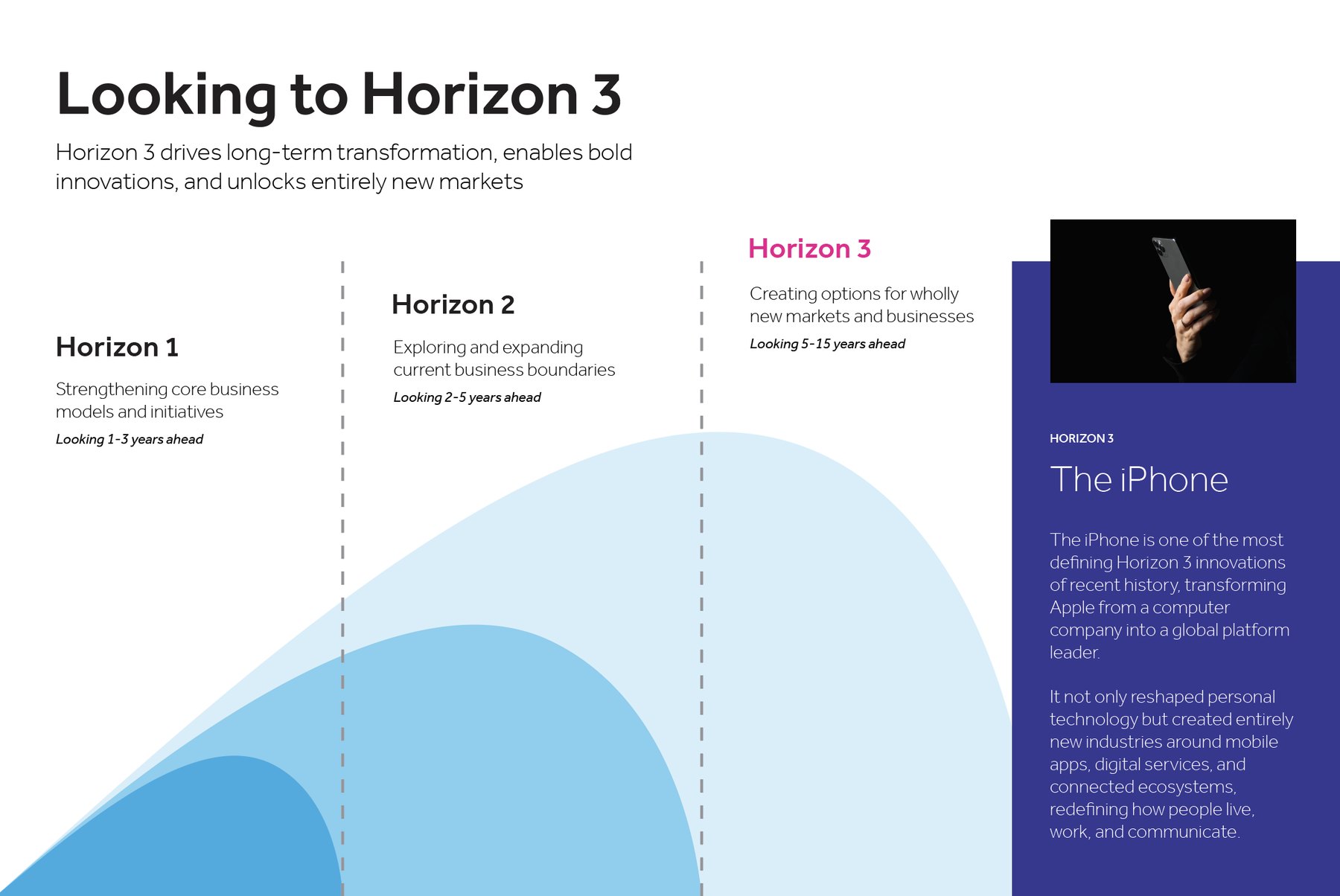
A major energy enterprise needed to build a Horizon three practice, with a playbook full of theory, a team that had never run one, and a culture built to avoid exactly this kind of risk.
A mandate for new markets, inside a culture built to avoid them
The client knew its long-term position depended on ventures well outside the core business, and stood up a small internal team to go find them. That team had never run an innovation practice, and the playbook they inherited explained the theory without saying how to run a single session.
The Fellows came from across the business. Well connected, capable, and completely unpracticed at leading colleagues through work with no obvious right answer.

Making an abstract time horizon concrete on day one
Four stages, each with something you could hold
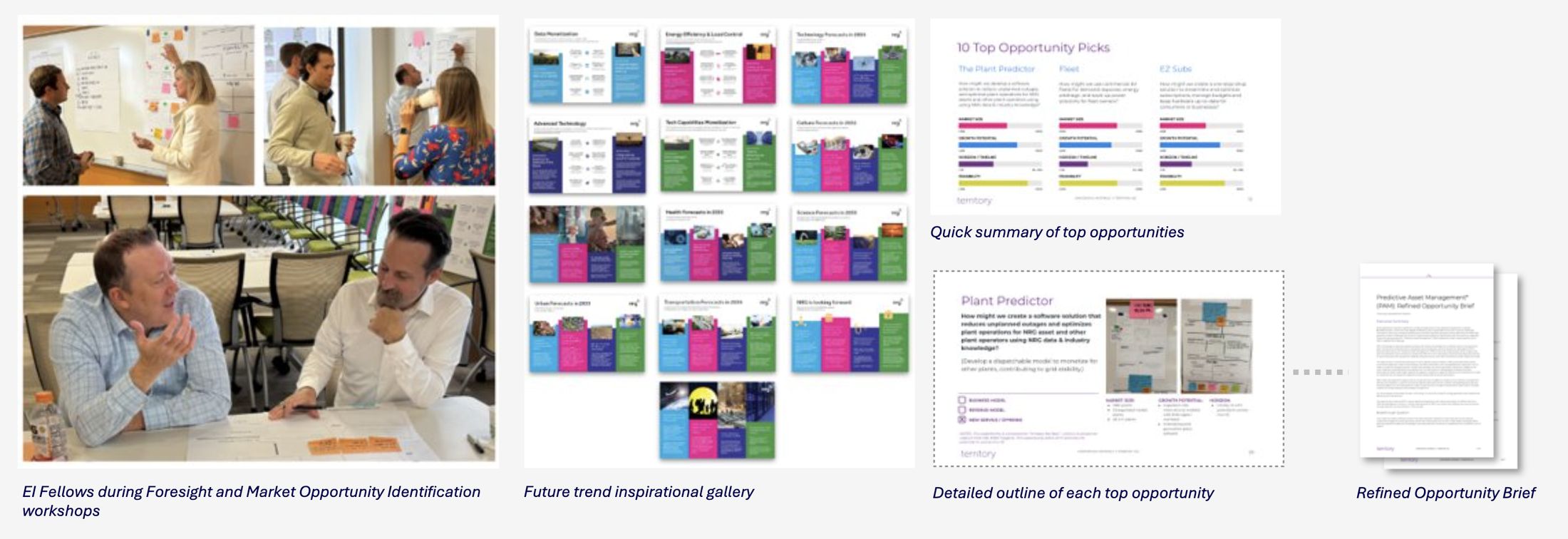
Emerging trends, frontier technology, adjacent industries, and market shifts, framed to get Fellows thinking past the business they already knew.
Connecting far-out ideas to real entry points inside the company: existing assets, partners, and technical capability.
Step-by-step frameworks that let Fellows grow an idea without drowning in it or jumping straight to a solution.
Turning the strongest opportunities into something testable, with the open questions named out loud rather than deferred.
A team can run a flawless process and still arrive somewhere unremarkable if nobody gave them anything new to think with. Inspiration is not a warm-up before the real work, it is the raw material the rest of the pathway depends on.
So the research became something people could move around and argue with rather than read. Getting the Fellows out of the assumptions they arrived with was the whole point, and it had to happen before anyone was asked to produce an idea.


Fellows in foresight and market opportunity identification workshops
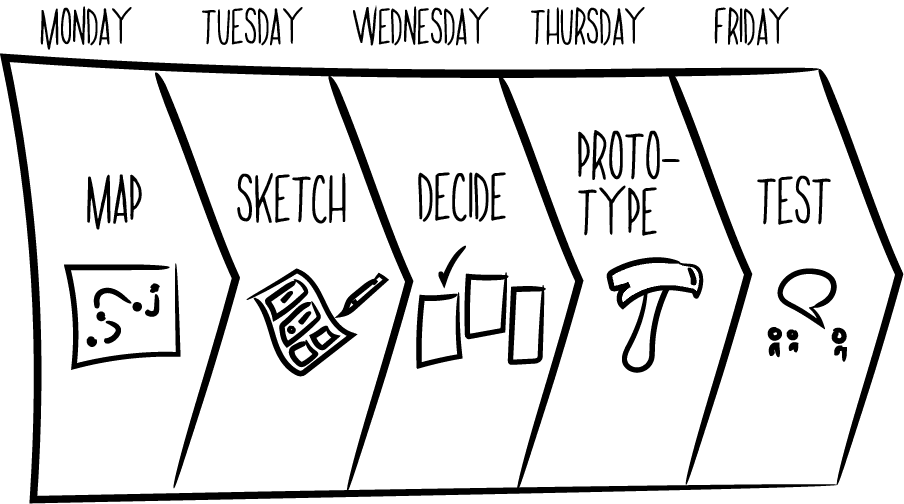
Map, sketch, decide, prototype, test. A fixed structure with a visible end date gave a risk-conscious organisation permission to spend a week in genuine uncertainty, which mattered as much to the executives watching as to the Fellows running it.


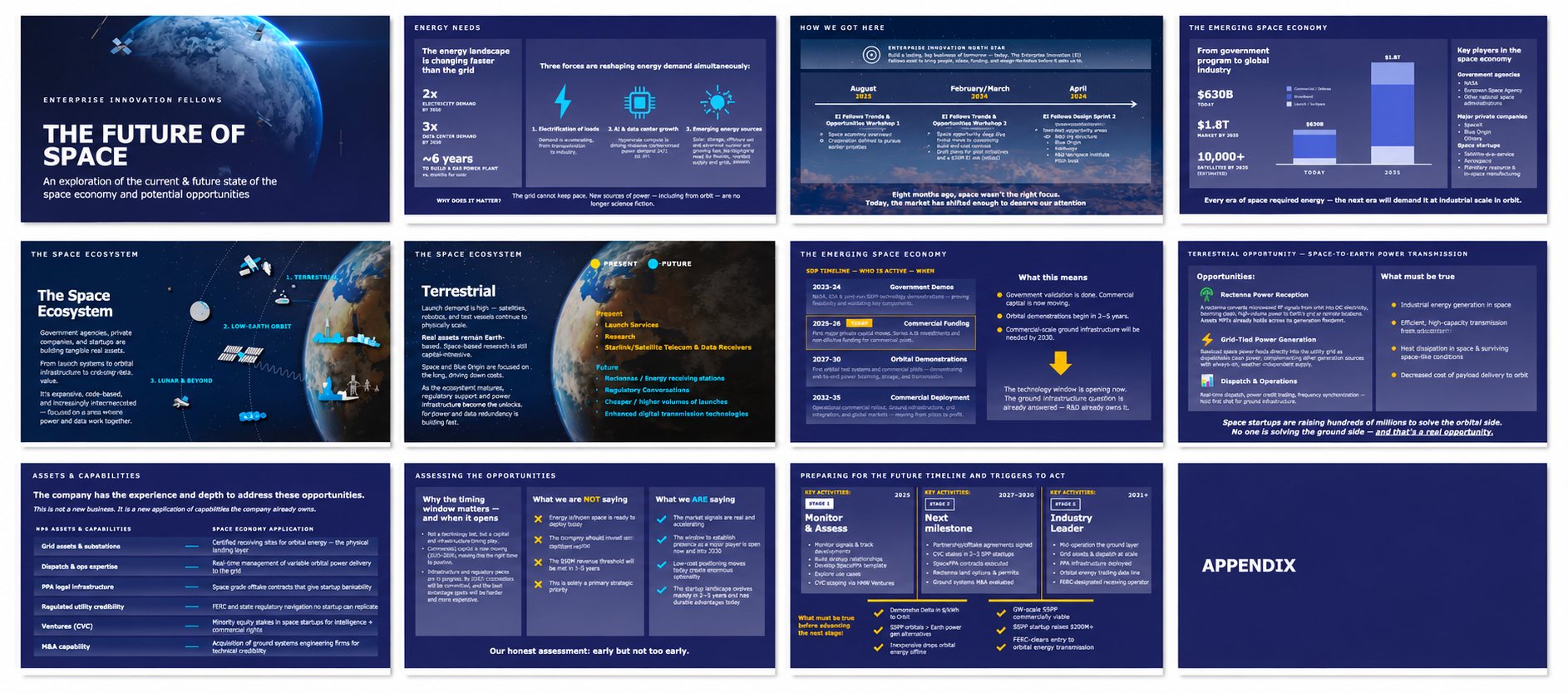
Concepts fleshed out and ready for the next phase

The outcome of one of our design sprints, a complete deck walking through the concept

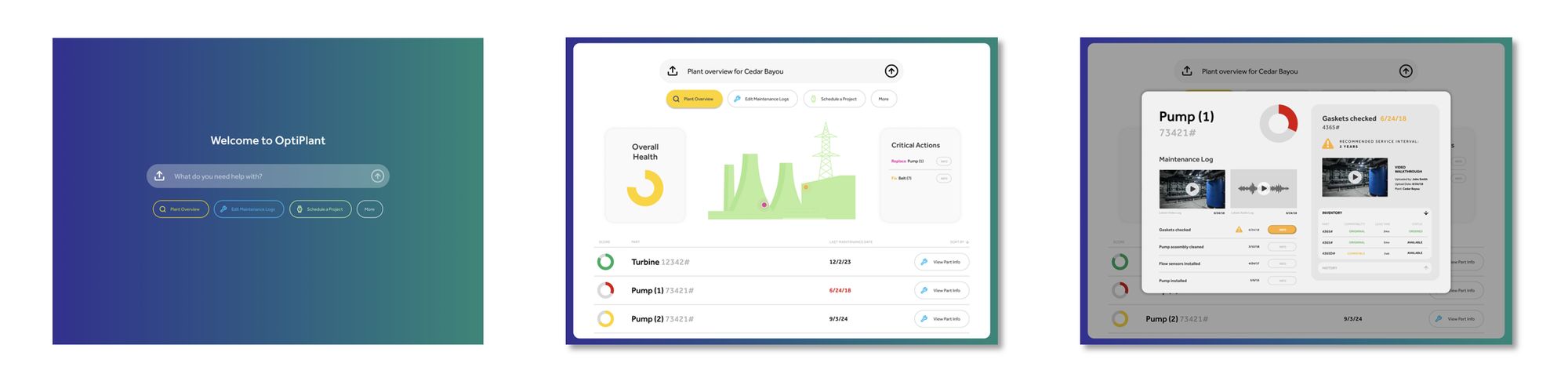
A live prototype, built so the concept could be tested rather than described
What year one left behind
Defined processes they can run without us
Each ranked for viability and potential impact, and set aside for future tracking
Carried through to testable interfaces
The enterprise went from a small team holding a theoretical playbook to a working source of new-market opportunities, with trained Fellows, a ranked portfolio, and a research backlog that makes the next cohort faster than the first. The harder gain is cultural. People who had never been asked to think this way now have a method for doing it.